
الثنائيات (Diodes)Diodes
الثنائي عنصر شبه موصل يوصل التيار في اتجاه واحد فقط، ويُستغل هذا التأثير في التقويم (rectification): يمر الجزء الموجب من إشارة التيار المتردد ويُحجب الجزء السالب. A diode is a semiconductor device which conducts only in one direction. This effect is used for rectification when the positive part of an AC-signal can pass while a negative part is blocked.
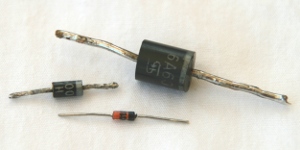
للثنائي طرفان مختلفان: الإلكترود الموجب يسمى الأنود (anode) والسالب يسمى الكاثود (cathode). والكاثود موسوم دائماً بوضوح على جسم الثنائي بحلقة (ring). A diode has two different terminals. The positive electrode is called anode and a negative cathode. The cathode is always clearly marked on the body of the diode as a ring.
وظيفة كل هذه الثنائيات واحدة، والفروق في جهود التشغيل القصوى والتيارات القصوى. The function of all this diodes is the same. The differences are the maximum operating voltages and the maximum currents.
على الألواح الإلكترونية وفي المخططات تُرمز للثنائيات عادةً بالحرف D. On electronic boards and in circuit diagrams diodes are often marked with a D.
|
اختلاف الأحجام يعني اختلاف جهود التشغيل و/أو التيارات.

Different sizes means different operating voltages and/or different currents. |
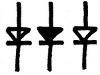
الرموز: يعبّر الرمز عن وظيفة الثنائي أحادية الاتجاه، والسهم في المخطط يبيّن اتجاه مرور التيار.
Symbols
The symbol expresses the one way function of the diode. The arrow in the diagram shows the direction of the current flow.
|
لا يمر التيار إلا في اتجاه واحد: من الأنود إلى الكاثود — في اتجاه السهم.
Current can only flow in one direction: From Anode to Cathode - in the direction of the arrow. |
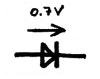
الأنواع: ككل العناصر الإلكترونية للثنائيات ضياعات أثناء العمل، لكن خلافاً للمقاومات فإن هبوط الجهد على الثنائي لا يعتمد على المقاومة ولا على التيار؛ فهبوط الجهد ثابت دائماً 0.7 V أياً كان التيار المار (يقول بعضهم 0.6 V).
Types
As all electronic devices also diodes have losses while working. But compare to resistors the voltage drop across the diode does not depends on the resistance and the current. The voltage drop over a diode is fixed. It is always 0.7 V, no matter which current flows. (Some people say it is 0.6V).
|
هبوط الجهد على الثنائي 0.7 V دائماً.
The voltage drop across a diode always is 0.7 V. |
التطبيقات: يُستخدم الطابع الأحادي الاتجاه كثيراً في الإلكترونيات؛ فيمكن حجب جهود التيار المستمر أو جمعها، وتُقوَّم جهود التيار المتردد.
Applications
In electronics the one-way character is very often used. DC voltages can be blocked or added and AC voltages are rectified.ويمكن أيضاً استخدام كون هبوط الجهد ثابتاً ومستقراً كجهد مرجعي (reference voltage) في دارات التثبيت وفي مراحل القياس. But also the fact that the voltage drop is always the same and stable can be used as a reference voltage in stabilizer circuits and in measurement stages.
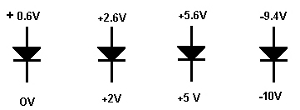
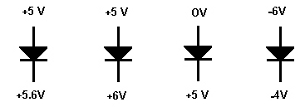
حين يتجه التيار في اتجاه واحد فقط (من الأنود إلى الكاثود) ويكون هبوط الجهد على الثنائي 0.7 V دائماً (أو 0.6 V)، يجب أن يكون جهد الأنود أعلى بنحو 0.6 V من جهد الكاثود. نقول حينها إن الثنائي في الانحياز الأمامي (forward bias). When the current only goes in one direction (from anode to cathode) and the voltage drop across the diode is always 0.7V (or 0.6V), then the voltage at the anode has to be about 0.6V higher than at the cathode. We say the diode is in forward bias.
|
الانحياز الأمامي: جهد الأنود أكثر إيجابية من جهد الكاثود، وهبوط الجهد 0.6 V.
Forward biased. The voltage at anode is more positive than at the cathode. The voltage drop is 0.6V. |
حين يكون جهد الأنود أصغر من جهد الكاثود يحجب الثنائي التيار فلا يمر شيء عبره، ويكون جهد الكاثود آتياً من مصدر آخر لا عبر الثنائي. الثنائي حينها في الانحياز العكسي (reverse bias). When the voltage at anode is smaller than at cathode the diode blocks. No current flows through the diode. The voltage at cathode comes from another source but not through the diode. The diode is in reverse bias.
|
الانحياز العكسي: جهد الأنود أكثر سلبية من جهد الكاثود، ولا يمكن أن يمر التيار عبر الثنائي، وجهد الكاثود آتٍ من مصدر آخر.
Reverse biased. The voltage at anode is more negative than at the cathode. A current can not flow through the diode. The voltage at cathode comes from another source. |
|
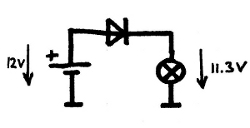
ثنائي في الاتجاه الأمامي: يضيء المصباح. والجهد على المصباح 11.3 V لأن هبوط الجهد على الثنائي 0.7 V.
Diode in forward direction. The bulb glows. The voltage across the bulb is 11.3V because the voltage drop across the diode is 0.7V. |
|
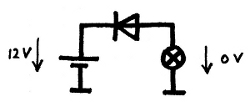
ثنائي في الاتجاه العكسي: لا يمر تيار ولا يضيء المصباح.
Diode in reverse direction. No current flows. The bulb does not glow. |
|
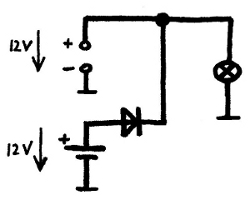
يضيء المصباح حين يتوفر جهد من البطارية أو من التغذية الخارجية، وعند توفرهما معاً يمر التيار من التغذية لأن جهدها أعلى قليلاً (12 V) من البطارية (12 V − 0.7 V = 11.3 V). ويمنع الثنائي أيضاً تلف البطارية بفعل الجهد الخارجي، وهو في هذه الحالة يعمل في الاتجاه العكسي.
The bulb glows when a voltage from the battery or from the external power supply is available. When both are applied the current flows from the power supply because the voltage is slightly higher (12V), than from the battery (12V - 0.7V = 11.3V). The diode also prevents the battery by destroying from the external voltage. In this case the diode works in reverse direction. |
|
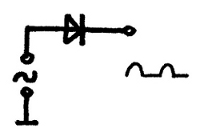
تُقطع الموجة الجيبية لإشارة الدخل المترددة ولا يمر إلا الجزء الموجب عبر الثنائي. المزيد من المعلومات في قسم وحدات التغذية (Power Supplies).
The sine wave of the AC input signal is cut. Only the positive part passes through the diode. More information under Power Supplies |
|
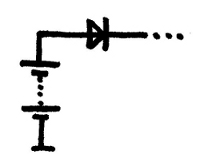
حماية من انعكاس القطبية: لا يمر التيار إلا إذا كانت قطبية البطارية صحيحة. الميزة: لا ينصهر أي مصهر. العيب: فقد جهد 0.7 V، ويجب مراعاة التيار الأقصى.
A reverse polarity protection. The current only flows when the polarity of the battery is correct. Advantage: No fuse will get triggered Disadvantage: 0.7V voltage loss, the maximum current has to be respected. |
|
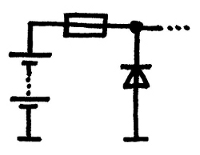
حماية أخرى من انعكاس القطبية: حين تكون القطبية صحيحة لا يؤثر الثنائي، وإذا انعكست القطبية يمر تيار قصر يُصهر المصهر. الميزة: لا فقد جهد ولا حاجة لمراعاة تيار التشغيل. العيب: يتلف المصهر ويجب استبداله عند انعكاس القطبية.
An other reverse polarity protection. When polarity is correct the diode has no influence. Is the polarity in reverse, a short circuit current flows and blows the fuse. Advantage: No voltage loss, operating current must no be respected. Disadvantage: Fuse will be destroyed and has to be exchanged in case of wrong polarity. |
الاختبار: ليس للثنائي مقاومة أومية محددة، لأن هبوط الجهد ثابت ومستقل عن التيار؛ ونتيجة قياس الأوميتر تعتمد على الأوميتر نفسه أكثر من اعتمادها على الثنائي. لا تستخدم مدى الأوميتر في مقياسك المتعدد، بل استخدم مدى الثنائي (diode-range) الخاص دائماً.
Testing
A diode does not have a certain ohmic resistance, because the voltage drop is fixed and independent from the current. The measurement result of the ohmmeter depends more on the ohmmeter itself than on the diode. Do not use the ohmmeter range of your multimeter. Use always the special diode-range.على أي حال القيمة على الشاشة ليست مهمة؛ فالمقياس المتعدد يُستخدم فقط لفحص هل للثنائي توصيل أم لا. How ever, the value in the display is not important. The multimeter is only used to test if the diode has conduction or not.
|
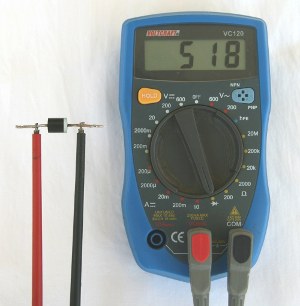
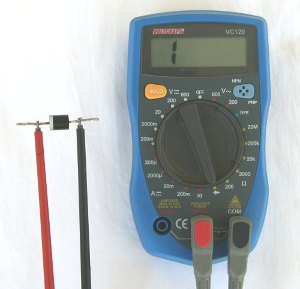
مقياس متعدد على مدى الثنائي، والطرف الموجب على الأنود: يمر التيار وتظهر قيمة على الشاشة.
Multimeter in Diode-range. Plus-lead to anode. Current flows. The display shows a value. |
|
الطرف الموجب على الكاثود: يجب ألا يمر التيار، وتظهر الشاشة دارة مفتوحة. الثنائي سليم.
Plus-lead to cathode. Now current must not flow. The display shows open circuit. The diode is OK. |
كما هو الحال دائماً عند العمل بأوميتر على لوح، لا تحصل على قياس صحيح إلا بعد فصل أحد طرفي الثنائي عن بقية الدارة. As always when working with an ohmmeter on a board, a correct measurement result you only get after disconnection of at least one diode lead from the rest of the circuit.
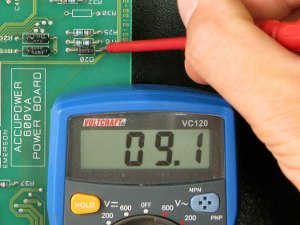
تحت الجهد يمكن فحص الثنائي بقياس هبوط الجهد عليه. Under power the diode can be checked by measuring the voltage drop.
يجب أن يكون جهد الأنود أعلى بـ 0.7 V من جهد الكاثود. The voltage at anode has to be 0.7V higher than at cathode.
وإذا كان الجهد نفسه فالثنائي مقصور. Is the voltage the same the diode has a short.
|
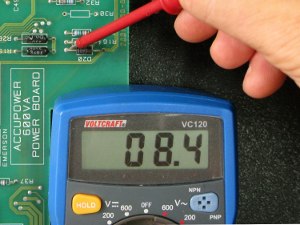
أثناء التشغيل يكون هبوط الجهد 0.7 V (من الأنود إلى الكاثود).
In operation the voltage drop is 0.7V. (Anode to cathode) |
|
أي إن جهد الكاثود أقل بـ 0.7 V من جهد الأنود.
Thus the voltage at cathode is 0.7V lower than at anode. |
استكشاف الأعطال: في الممارسة تكون الثنائيات التالفة مقصورة دائماً. نظرياً يمكن أن يُقصر الثنائي أولاً ثم ينفجر بفعل التيار الأعلى بكثير فيصبح عالي المقاومة، لكن في الممارسة ينصهر مصهر أو يحترق مقاوم قبل حدوث ذلك.
Troubleshooting
In practice defective diodes always have a short. In theory it is possible that a diode first gets a short and then it bursts because of the much higher current and becomes high-resistance. But in practice a fuse is triggered or a resistor is burned before that happens.تحت الجهد لا يُنشئ الثنائي هبوط جهد 0.7 V فقط، بل يمكنه أيضاً فصل جهدين مختلفين؛ فالجهد على الكاثود ليس بالضرورة آتياً من الأنود، بل قد يأتي من مصدر آخر. وعموماً إذا كان جهد الكاثود أعلى من جهد الأنود فالجهد آتٍ من مكان آخر والثنائي يفصل الجهدين — والثنائي سليم. Under power a diode not only creates a voltage drop of 0.7V but also can separate two different voltages. A voltage at cathode must not necessarily be the voltage coming from the anode. It also may come from another voltage source. In general, is the voltage at the cathode higher than at anode, the voltage comes from anywhere else and the diode keeps the voltages separate. The diode is OK.
كما هو الحال دائماً في الإلكترونيات تُعد الحرارة مشكلة كبيرة؛ فالثنائيات تسخن زيادة و/أو تُنشئ نقاط لحام باردة. افحص كل نقاط اللحام في اللوح بعناية وأعد اللحام عند أي شك. As always in electronics heat is a big problem. Diodes get overheated and/or create cold soldering points. Check all solder points of the board carefully and resolder the joints in case of a doubt.
إذا كان الثنائي تالفاً فاختر نوعاً أكبر إن أمكن. When a diode is defective choose a bigger type if possible.
قائمة بالثنائيات الشائعة: تختلف الثنائيات في جهد تشغيلها الأقصى وتيارها المسموح الأقصى.
List of common diodes
Diodes differ in their maximum operating voltage and their maximum allowed current.وتتراوح الأنواع من بضعة mA (مثل 1N914) إلى عدة أمبيرات (مثل BY550). Types reaches from a few mA (1N914) to several Amps (BY550).
وهذه بعض الثنائيات الشائعة ومواصفاتها: Here some common diodes and their specifications:
| النوع Type | الجهد (الأقصى) Voltage (maximum) | التيار (الأقصى) Current (maximum) |
| 1N914 1N914 | 100 V 100 V | 75 mA 75 mA |
| 1N4148 1N4148 | 75 V 75 V | 200 mA 200 mA |
| 1N4001 1N4001 | 50 V 50 V | 1 A 1 A |
| 1N4002 1N4002 | 100 V 100 V | 1 A 1 A |
| 1N4003 1N4003 | 200 V 200 V | 1 A 1 A |
| 1N4004 1N4004 | 400 V 400 V | 1 A 1 A |
| 1N4005 1N4005 | 600 V 600 V | 1 A 1 A |
| 1N4006 1N4006 | 800 V 800 V | 1 A 1 A |
| 1N4007 1N4007 | 1000 V 1000 V | 1 A 1 A |
| 1N5400 1N5400 | 50 V 50 V | 3 A 3 A |
| 1N5401 1N5401 | 100 V 100 V | 3 A 3 A |
| 1N5402 1N5402 | 200 V 200 V | 3 A 3 A |
| 1N5404 1N5404 | 400 V 400 V | 3 A 3 A |
| 1N5406 1N5406 | 600 V 600 V | 3 A 3 A |
| 1N5407 1N5407 | 800 V 800 V | 3 A 3 A |
| 1N5408 1N5408 | 1000 V 1000 V | 3 A 3 A |
| BY 133 BY 133 | 1300 V 1300 V | 1 A 1 A |
| BY 255 BY 255 | 1300 V 1300 V | 3 A 3 A |
| BY550-400 BY550-400 | 400 V 400 V | 5 A 5 A |
الأسعار: الثنائيات رخيصة جداً، والأنواع القياسية لا ينبغي أن تغيب عن أي ورشة.
Prices
Diodes are very cheap and standard types should not be missing in every workshop.وهذه أسعار نمطية للثنائيات والمقوّمات في أوروبا: Here are the typical prices for diodes and rectifiers in Europe:
| 1N41481N4148 | 0.02 € |
| 1N40071N4007 | 0.02 € |
| 1N54081N5408 | 0.06 € |
روابط ومصادر
Links and sources
Wikipedia: Diodefrankshospitalworkshop: Data sheets